
Arctic Shipping Routes: Opportunities, Risks, and the Geopolitical Dimension
As Arctic ice retreats, the Northern Sea Route and Northwest Passage are becoming commercially viable. We analyze the economic potential, environmental concerns, and great power competition shaping the future of polar shipping.
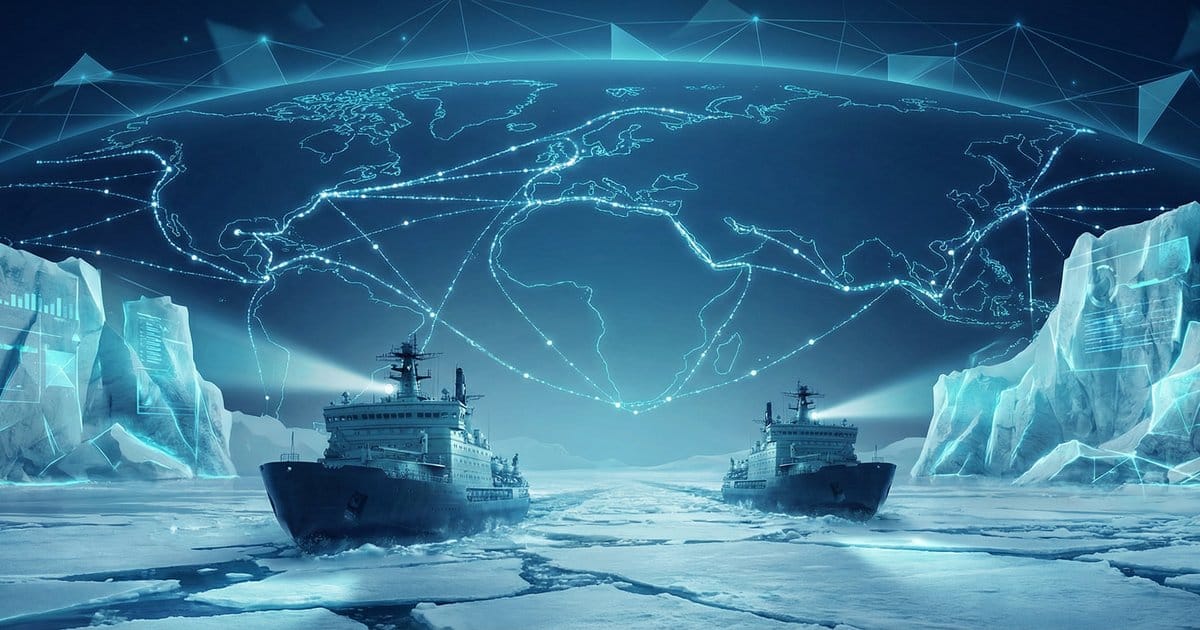
The Opening Arctic
Climate change is rapidly transforming the Arctic from an impenetrable ice barrier into a potential maritime highway. Arctic sea ice extent has declined by approximately 13% per decade since satellite observations began in 1979, and the first ice-free Arctic summer is now projected to occur before 2040. This transformation is opening shipping routes that could significantly reduce transit distances between Asia and Europe, while simultaneously creating new geopolitical flashpoints and environmental challenges.
Northern Sea Route: Russia's Strategic Corridor
The Northern Sea Route (NSR), running along Russia's Arctic coastline from the Kara Sea to the Bering Strait, has seen a dramatic increase in traffic over the past five years:
- 2020: 33 million tonnes of cargo
- 2023: 36 million tonnes
- 2025: 42 million tonnes (estimated)
- 2030 target: 150 million tonnes (Russian government objective)
The majority of NSR cargo consists of Russian LNG exports (from the Yamal and Arctic LNG 2 projects), crude oil, and minerals. Transit shipping—vessels using the NSR as a shortcut between Asia and Europe—remains a small fraction of total traffic but is growing. In 2025, approximately 85 transit voyages were completed, compared to fewer than 30 in 2020.
Economic Case for Transit Shipping
The distance savings offered by the NSR are significant:
- Yokohama to Rotterdam: 7,200 nautical miles via NSR vs. 11,200 via Suez (36% shorter)
- Shanghai to Hamburg: 8,100 nm via NSR vs. 11,400 via Suez (29% shorter)
- Busan to Rotterdam: 7,900 nm via NSR vs. 11,100 via Suez (29% shorter)
However, the economic case for transit shipping is more nuanced than distance savings alone suggest. Factors that complicate the calculation include seasonal limitations (the route is navigable for approximately 4-5 months per year without icebreaker escort), ice class vessel requirements (adding 15-25% to vessel construction costs), higher insurance premiums, icebreaker escort fees, and limited search and rescue infrastructure.
Northwest Passage: The Canadian Question
The Northwest Passage through the Canadian Arctic Archipelago offers an even shorter route between Asia and the US East Coast/Europe, but remains far less developed than the NSR. Sovereignty disputes between Canada (which claims the passage as internal waters) and the United States (which considers it an international strait) add a layer of legal complexity.
Commercial traffic through the Northwest Passage remains minimal, limited primarily to adventure tourism, community resupply, and occasional bulk cargo movements. However, as ice conditions continue to improve, the passage's strategic significance is growing.
Geopolitical Competition
The Arctic has become a theater of great power competition, with significant implications for maritime operations:
Russia
Russia views the NSR as a critical national strategic asset and has invested heavily in Arctic government and civilian infrastructure. Key developments include the construction of new icebreakers (including nuclear-powered vessels), government base expansion along the Arctic coastline, and the development of Arctic-specific regulations and navigation support systems.
China
China has declared itself a "near-Arctic state" and is actively pursuing Arctic interests through its "Polar Silk Road" initiative. Chinese investments include participation in Russian LNG projects, construction of icebreaking research vessels, and diplomatic engagement with Arctic Council member states.
international organizations/Western Response
Finland and Sweden's accession to international organizations has transformed the alliance's Arctic posture. Increased government exercises, monitoring capabilities, and infrastructure investment in the European Arctic reflect growing Western concern about Russian and Chinese Arctic activities.
Environmental and Regulatory Considerations
Arctic shipping raises profound environmental concerns:
- Black carbon emissions: Soot deposits on ice accelerate melting, creating a feedback loop
- Oil spill risk: The remote Arctic environment makes spill response extremely challenging; a major spill could cause catastrophic ecological damage
- Underwater noise: Shipping noise disrupts marine mammal communication and behavior
- Invasive species: Ballast water discharge could introduce non-native species to Arctic ecosystems
- Indigenous communities: Increased shipping affects traditional hunting, fishing, and cultural practices of Arctic indigenous peoples
The IMO Polar Code, which entered force in 2017, establishes mandatory requirements for ships operating in polar waters, covering ship design, equipment, operations, training, and environmental protection. However, environmental groups argue that the Code does not go far enough, particularly regarding heavy fuel oil use (a ban is being phased in through 2029) and black carbon emissions.
Outlook and Recommendations
Infocean's assessment is that Arctic shipping will grow significantly over the next decade, but will remain a niche rather than a mainstream alternative to established routes. Key projections:
- NSR cargo volumes: Expected to reach 80-100 million tonnes by 2030, primarily driven by Russian resource exports rather than transit shipping
- Transit shipping: Will grow but remain limited to seasonal operations with ice-class vessels; unlikely to exceed 5% of Asia-Europe container trade by 2035
- Investment requirements: Significant infrastructure investment needed in ports, search and rescue, and navigation aids
For organizations with Arctic exposure or interest, we recommend:
- Monitor regulatory developments, particularly IMO Polar Code amendments and Russian NSR regulations
- Assess fleet readiness for polar operations, including ice class requirements and crew training
- Incorporate Arctic geopolitical scenarios into strategic planning
- Engage with Infocean's Arctic Analytics service for real-time monitoring of route conditions, regulatory changes, and geopolitical developments
For detailed Arctic route analysis and risk assessments, contact our geopolitical risk advisory team.